
A fall through a skylight can cost a lot more than you think.
For commercial roofing, solar, and HVAC contractors one fall through an unprotected skylight triggers an unforgiving sequence: a six-figure OSHA fine, a multi-million-dollar civil suit, and a criminal indictment served on the owner and their management personally. Here’s exactly what’s at stake.
For most contractors, a single skylight safety incident is enough to result in catastrophe for their crew, their reputation, their finances, and their future. Here’s what you need to know:
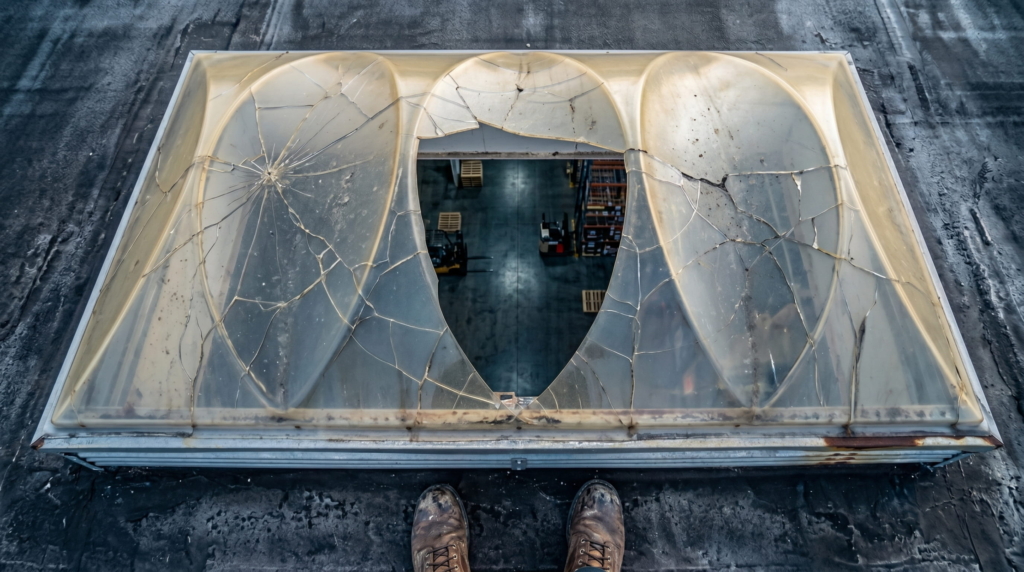
A commercial skylight is an open hole in the roof
To a worker walking backward with a roll of membrane, carrying a solar panel, or maneuvering around a rooftop HVAC unit, a skylight dome looks solid but it’s not. Years of UV exposure make acrylic domes so brittle that they easily give way under the weight of one of your crew members.
The National Institute for Occupational Safety and Health (NIOSH) attributes roughly 25% of all fatal falls through roof surfaces to skylights specifically. Federal injury data shows that 32% of all commercial rooftop falls happen through unprotected skylights, accounting for more than 75 confirmed U.S. fatalities in recent years.
The Western U.S. carries the heaviest load. Between 2014 and 2019, California recorded 50 fatal skylight incidents, the most of any state in the country. Texas recorded 29 over the same period and the pace has not slowed OSHA records show six fatal skylight falls in Texas alone during a 12-week stretch in summer 2024.
OSHA
Regulations You Can't Afford to Ignore
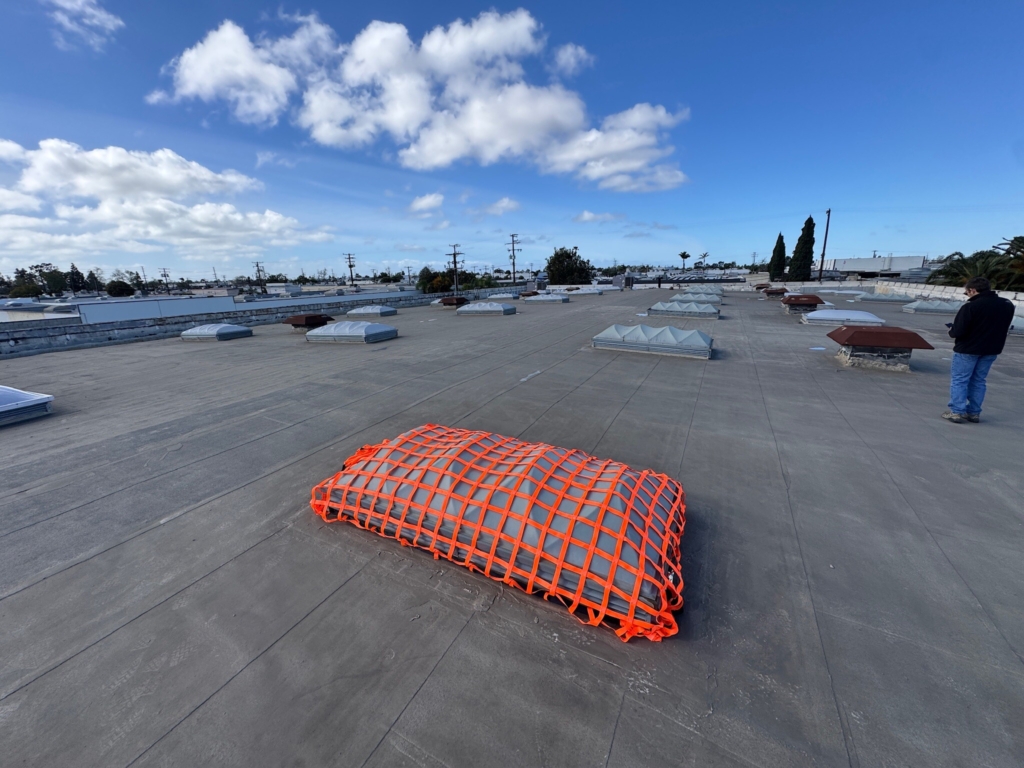
OSHA classifies every skylight as a “hole” in a walking-working surface. Under OSHA and Cal/OSHA guidelines, any project where a worker can approach within six feet of a skylight requires that the skylight be protected against fall-through.
1910.21
1910.28(b)(3)(i)
1926.501(b)(4)
§3212
Most contractors expect a fine after a citation. What they don’t expect is how that fine gets calculated.
Per Worker:
When a fall happens, OSHA writes its citations against each worker who was exposed to the hazard rather than against the hazard itself.
Per Day:
If the citation gives a deadline to fix the hazard and the deadline passes, OSHA starts charging an additional daily fine that keeps running until the work is done.
Per Violation:
And if the company has been cited before for a similar violation, or OSHA finds that the rule was knowingly ignored, the maximum jumps roughly tenfold.
| Penalty Class: | 2026 Maximum: | What Triggers It: |
|---|---|---|
| Serious / Other-than-Serious |
$16,550 per violation, per worker exposed | A condition the employer knew, or should have known, was likely to cause serious harm. |
| Failure to Abate | $16,550 per day | Daily charge that begins after the abatement deadline in the citation passes. |
| Repeat / Willful | $165,514 per violation | A second similar violation, or evidence the employer knowingly ignored the rule. |
One fall can close companies, end careers, and put crews in prison.
A worker fatality on a non-compliant job site doesn’t always stay a civil OSHA matter. State and federal prosecutors can both bring criminal charges over the same incident, and those charges land on individuals as well as the company:






The Occupational Safety and Health Act makes it a federal Class B misdemeanor when a willful violation of an OSHA standard causes a worker’s death. The maximum sentence is six months in federal prison for a first conviction and one year for a second. The charge attaches to the individuals who made the safety call, not to the entity that signed the contract.
State prosecutors don’t need OSHA’s referral. After a worker fatality, a local district attorney can open an independent criminal investigation under state law and bring charges of criminal negligence, reckless endangerment, or involuntary manslaughter. Owners and supervisors have been convicted on these charges in cases involving missing or failed fall protection, with sentences ranging from several months to several years — and felony records to match.
An LLC or a corporation does not automatically protect the people inside it from a criminal charge. When a court finds that a specific person knew about the hazard and chose not to deal with it, that person can be prosecuted personally regardless of which entity signed the contract.
OSHA requires inspection records, not just installed equipment.
OSHA’s rules don’t end when your protective system is installed. Safety nets and other fall arrest equipment are subject to ongoing inspection requirements, and the contractor is the one who has to produce those records when an inspector asks for them. A system that’s been up for months without a documented inspection is, at the moment of citation, no better than a system that was never up at all.
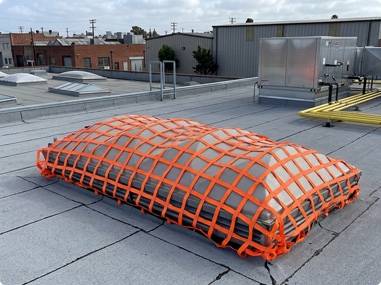
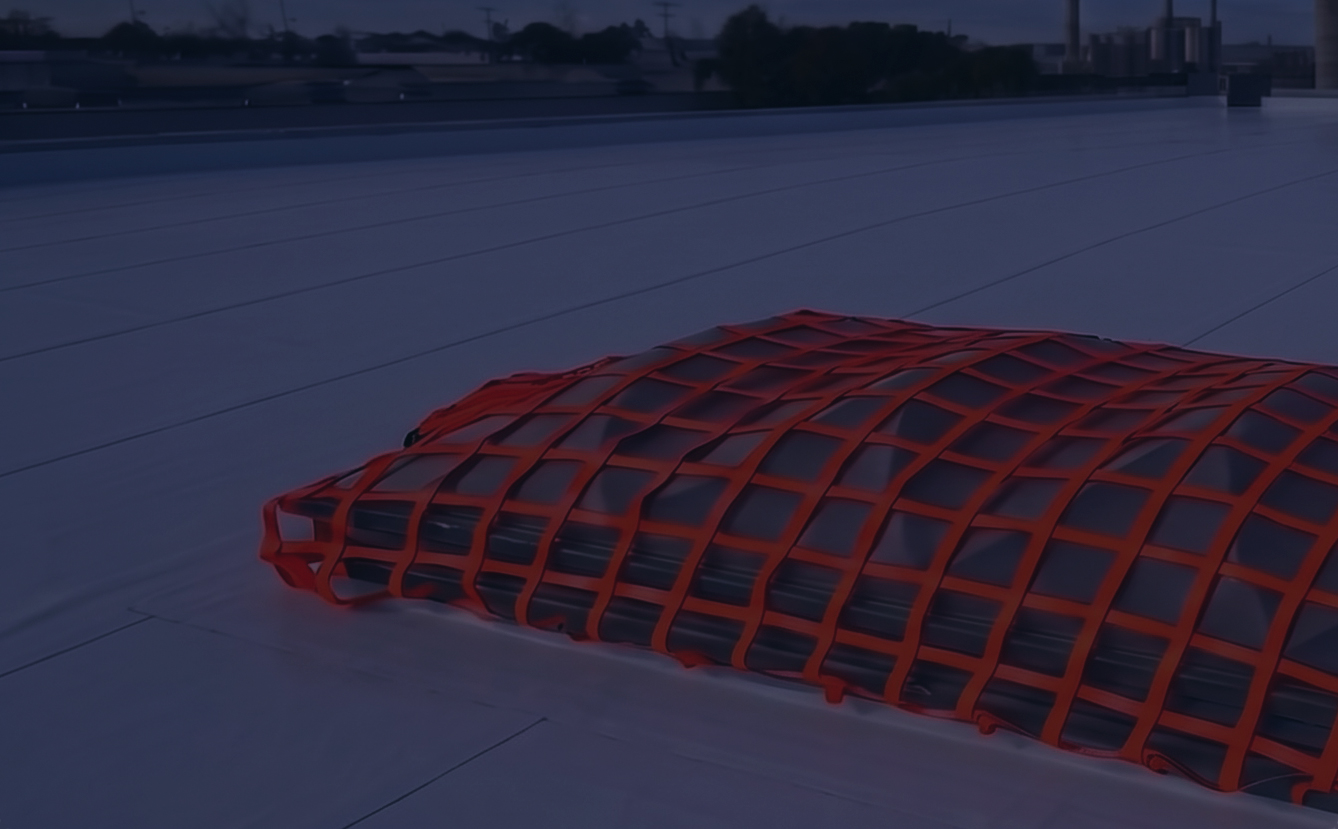
The Over Skylight Human Arrest Safety System uses S.M.A.R.T. software to provide the safety monitoring, auditing, records, and tracking needed to close that gap.
The S.M.A.R.T. system’s patent-pending software tracks every net’s location, logs each installation and removal from the job site, and records weekly OSHA-required visual inspections. In the event of a fall-through arrest, crew members can document the time and location of the fall by simply scanning the net’s QR code, instantly alerting everyone on the contractor’s notification list by text or email. Finally, the system exports the complete inspection log on demand, so when OSHA asks for your records, they’re ready at your fingertips.

Are You Protecting Your Crew?