
Industries We Serve
Every trade that works on a commercial roof faces the same skylight hazard.
Crew across the trades might have different jobs, use different tools, and operate on different schedules, but the moment any worker steps onto a roof with an uncovered skylight, they’re exposed to the exact same risks.
Familiarity Is Its Own
Kind of Hazard.
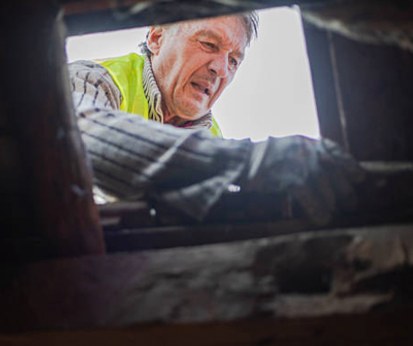
Roofing crews spend most of their day around skylights, and that repetition is exactly what makes skylights dangerous for roofers. A crew that’s walked the same roof a hundred times without incident stops registering skylights as potential fall through hazards and that is when a fall happens.
It’s because these falls are so predictable and so catastrophic that OSHA treats them so seriously. Under OSHA 1926.501(b)(4), companies without safety systems are cited per worker who was exposed to an unprotected skylight. One skylight plus a six person crew equals six citations.

The Skylight Doesn't Have
to Be In Scope to End
In a Citation
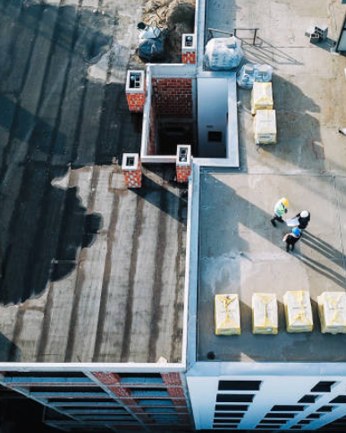
Solar installation crews are on commercial rooftops every day, and they’re subject to the same OSHA fall protection standards as any roofing crew. That surprises a lot of solar contractors. The assumption is that skylight protection is a roofing problem. OSHA doesn’t see it that way.
If there are uncovered skylights within fall distance of any worker on the roof, those workers are exposed to a violation under OSHA 1926.501(b)(4). It doesn’t matter that the skylights had nothing to do with the installation scope. It doesn’t matter that nobody got very close to them. Exposure is the standard, not proximity. The Over Skylight Human Arrest System deploys in under two minutes with no tools, fast enough to be done before the first panel comes off the truck.

Skylights Aren’t the Focus.
They’re Still the Contractor’s
Responsibility.
HVAC crews are on commercial rooftops to service or install equipment, and that’s where their attention is. The roof is just the surface they’re working on, which means the skylights nearby aren’t part of anyone’s mental checklist.
But OSHA doesn’t factor in what brought a crew to the roof. A crew working around uncovered skylights is exposed to a violation under OSHA 1926.501(b)(4) regardless of what they came up there to do.
The Over Skylight Human Arrest System deploys in under two minutes with no tools and no roof penetrations. It goes up before the real work starts and comes down when it’s done, without adding meaningful time to the job.
Protection You Can
Specify, Inspect & Defend.
Safety consultants and EHS firms are held to a higher standard than the contractors they advise. Recommending skylight protection is not enough. It has to be installed correctly, inspected on schedule, and documented in a way that holds up when OSHA asks for proof.
Because from OSHA’s perspective, undocumented protection may as well not exist.
The Over Skylight Human Arrest System combines physical protection with digital documentation. Every system includes a serialized QR code permanently attached to the net and the carrybag. Installation, inspections, and removal are logged with a simple scan, creating a timestamped record tied to that specific system and jobsite. The result is a skylight protection system that is not only OSHA-compliant, but OSHA-auditable.
Ready to Start Protecting Your Crews and Your Business?